18 Jul The best credit cards in Canada for 2024

Why trust us
MoneySense is an award-winning magazine, helping Canadians navigate money matters since 1999. Our editorial team of trained journalists works closely with leading personal finance experts in Canada. To help you find the best financial products, we compare the offerings from over 12 major institutions, including banks, credit unions and card issuers. Learn more about our advertising and trusted partners.
The best credit cards in Canada by category
When Canadians use the right credit card, they could save hundreds, if not thousands, of dollars per year. Plus, when you use your credit card wisely by paying off your balance in full and on time, you’ll boost your credit score.
Best overall cash back credit card
At a glance: With stellar returns on groceries and gas, a higher-than-average base earn rate, and a host of Amex benefits, the SimplyCash Preferred Card from American Express takes the top spot for cash back credit cards.
featured
Amex SimplyCash Preferred
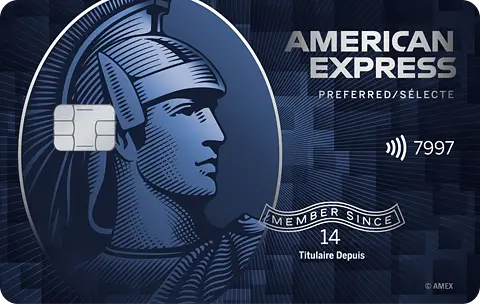
Annual fee: $120
Welcome offer: earn a $40 statement credit for each monthly billing period in which you spend $750 in purchases on your card.
Card details
| Interest rates | 21.99% on purchases, 21.99% on cash advances |
| Income required | None specified |
| Credit score | 725 or higher |
Pros
- Unlike other comparable cash back credit cards with a 0.5% to 1% base rate, the SimplyCash Preferred card guarantees at least 2% cash back on every dollar spent, regardless of spending category, whether in-store or online. That’s double or quadruple the advantage over comparable cash back cards. Plus, there’s no limit to how much you can earn at this rate.
- With gas and groceries being two major spending categories for most Canadians, the 4% returns add up quickly. For example, spending $200 per month on gas and $400 on groceries would net you $288 cash back annually.
- Set up your family members with supplementary cards to earn even more for no additional fee. Typically, extra cards run between $30 and $50 per card annually.
- Access Amex benefits, including dining and retail experiences and Amex Front of the Line, which gets you early access to event tickets. Receive bonus points or statement credits through Amex Offers tailored to you.
- Comes with an insurance package that includes $100,000 in travel accident insurance and $500 in combined baggage and flight delay coverage. The most impressive insurance packages generally come with travel credit cards, so this is a rare perk for a cash back card.
Cons
- Although American Express is accepted at tens of thousands of locations across Canada, there are places that don’t take the card, including Loblaw-affiliated stores. Plus, independent retailers and mom-and-pop shops are more likely to accept Visa and Mastercard.
- Unlike with some credit cards, you don’t have any flexibility as to when you can redeem your rewards. Cash back is only redeemed once annually, in September.
Honourable mention
At a glance: With a focus on gas and grocery purchases, the CIBC Dividend Visa Infinite provides many opportunities to rake in the rewards, and unlike with the SimplyCash Preferred, you can redeem your rewards at any time.
featured
CIBC Dividend Visa Infinite
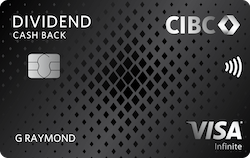
Annual fee: $120
4% cash back on eligible gas, EV charging and grocery purchases
2% on dining, daily transit and recurring payments
1% on everything else
Welcome offer: earn a 10% cash back welcome bonus of up to $300 (first 4 statements). Offer not available to QC residents. Terms and conditions apply.
Card details
| Interest rates | 20.99% on purchases, 22.99% on cash advances, 22.99% on balance transfers |
| Income required | Personal income of $60,000 or household income of $100,000 |
| Credit score | 725 or higher |
Pros
- Earn 4% on gas and groceries, as well as on charging your electric vehicle (EV). Spends in other common categories—dining, recurring bills, and transportation—get a 2% return.
- Get further discounts on gas, to the tune of up to $0.10 per litre, when you use your Journie Rewards card along with your CIBC Dividend Visa when you fill up at Pioneer, Fas Gas, Ultramar or Chevron gas stations.
- As long as you have accumulated $25 in rewards, you can redeem your cash back anytime.
Cons
- The caps on bonus earn rates are more restrictive than with some other cards. Once you spend $20,000 within your bonus categories or $80,000 overall, all additional purchases earn 1% cash back. This resets the day after your December statement is issued.
- Like with other cards that are part of the Visa Infinite program, this credit card’s income requirement may put it out of reach for some Canadians.
Best no-fee cash back card
At a glance: The Simply Cash Card shines with a 1.25% base earn rate—a full 0.75% more than most no-fee cards. Accelerated rates on gas and groceries make this a functional and affordable choice.
featured
Amex SimplyCash
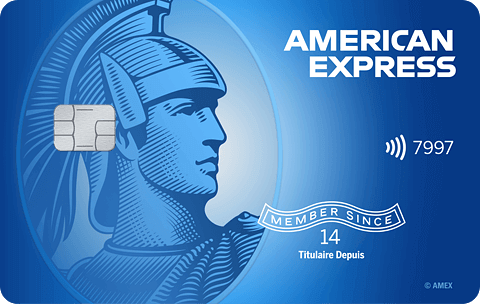
Annual fee: $0
Welcome offer: earn a $10 statement credit for each monthly billing period in which you make at least $300 in purchases (for a total value of up to $100).
Card details
| Interest rates | 21.99% on purchases, 21.99% on cash advances |
| Income required | None specified |
| Credit score | 725 or higher |
Honourable mention
At a glance: The Tangerine Money-Back Credit Card snags an honorable mention for its 2% cash back bonus on up to three spending of your choice. Plus, it’s a Mastercard, which means it’s accepted almost everywhere.
featured
Tangerine Money-Back Card
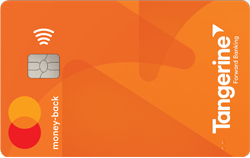
Annual fee: $0
Welcome offer: earn an extra 10% back on up to $1,000 in everyday purchases within the first 2 months. Must apply by October 31, 2024.
Card details
| Interest rates | 19.95% on purchases, 19.95% on cash advances and 19.95% on balance transfers |
| Income required | Personal or household income of $12,000 |
| Credit score | 660 or higher |
Pros
- This is the only credit card in Canada that lets you choose your own bonus categories, so you can tailor your card based on your personal spending habits (and earn more cash back in the process).
- You can save money on balance transfers, since it features a 1.95% promotional balance-transfer interest rate for new cardholders on six consecutive credit card statements, and a 1% balance transfer fee during this period. This is very low compared to the standard balance transfer fee of 3%.
Cons
- The card does not have any insurance coverage, lacking options for auto, mobile device and travel medical expenses. However, if your annual income is at least $60,000 (or $100,000 as a household), you could qualify for the Tangerine World Mastercard, which offers perks like mobile device and rental car insurance.
- The 0.5% base earn rate is low, although you can earn more rewards in your designated categories.
Best overall travel rewards credit card
At a glance: The American Express Cobalt card impresses with some of the highest earn rates on top spending categories like “eats and drinks,” which includes any spends at from grocery stores to coffee shops to food delivery. Plus, the travel points are easy to redeem, and you have more redemption options to choose from than with other travel cards in Canada.
featured
American Express Cobalt
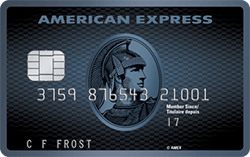
Annual fee: $156
5 points per $1 on dining and groceries
3 points per $1 on streaming services
2 points per $1 on travel, transit and gas
1 point per $1 on all other purchases
Welcome offer: earn 1,250 points for each month you spend $750, up to a maximum of 15,000 points.
Card details
| Interest rates | 21.99% on purchases, 21.99% on cash advances |
| Income required | None specified |
| Credit score | 725 or higher |
| Point value | 1 Amex Membership Rewards point = $0.01 when redeemed with the Flexible Points Travel Program, $0.015 on average with the Fixed Points Travel Program, and up to $0.02 with airline points transfers. |
Pros
- You can rack up points rather quickly as this credit card has some of the highest earn rates of any travel card in Canada, with 5 points per dollar on groceries and dining.
- Bonus categories are expansive, meaning that you’ll get boosts on more purchases. The travel and transit category is robust and includes flights, hotels and vacations, as well as gas, public transportation, taxis and rideshares—earning you 2 points per dollar on all these purchases.
- You can easily redeem your points on any airline three different ways based on your preferences: redeem for any travel expense charged to your card at a flat, easy-to-understand rate of 1 point for $0.01 in travel savings; transfer them to a participating airline or hotel loyalty program (including Aeroplan) at a 1:1 ratio, which basically doubles their value; or use the Fixed Points Travel chart to find a favourable rate without worrying about the carrier or blackout dates.
- There’s no fee for supplementary cardholders so you can earn more points, faster.
Cons
- The American Express card is not as widely accepted as Visa or Mastercard.
- The annual fee, charged at $12.99 monthly, comes out to $155.88, which is a noticeable jump from the $120 charged by comparable cards.
- Unlike our honourable mention pick below, the Scotia Gold American Express, this Amex card does not waive foreign transaction fees, so you’ll be paying an extra 2.5% on top of exchange fees for purchases made abroad.
- Although there’s an included comprehensive travel insurance package, it does lack trip cancellation coverage.
Honourable mention
At a glance: With healthy earn rates in popular (and broadly defined) spending categories, flexible redemptions, comprehensive travel insurance, and valuable perks like no foreign exchange fees, the Scotiabank Gold American Express is a strong challenger to the Amex Cobalt.
featured
Scotiabank Gold American Express
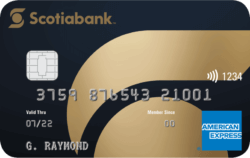
Annual fee: $120
6 points per $1 spent at Sobeys-affiliated stores
5 points per $1 on dining, entertainment and groceries
3 points per $1 on gas, transit and streaming
1 point per $1 on everything else
Pay no FX fees on foreign purchases
Welcome offer: earn up to $950 in value in the first 12 months, including up to 45,000 bonus Scene+ points. To qualify, apply by October 31, 2024.
Card details
| Interest rates | 20.99% on purchases, 22.99% on cash advances, 22.99% on balance transfers |
| Income required | $60,000 per year |
| Credit score | 725 or higher |
| Point value | 1 Scene+ point = $0.01 when redeemed for travel on any airline or hotel (including Airbnbs). |
Pros
- Like the Cobalt, the Scotiabank Gold American Express card has healthy earn rates of up to 5 times the points in top categories, with the biggest boost being 6 points per dollar at a handful of popular grocers, including Sobeys and FreshCo.
- You can redeem your points retroactively, if you wish, using the Apply Points to Travel option, meaning you can apply points to travel purchases made on your card for up to one year later—a huge and rare benefit. Its flexibility of what counts as travel purchases is another standout. In addition to flights and hotels, Scotia considers Airbnb rentals, car shares, public transportation fares and taxis travel expenses.
- You don’t have to have only points value to redeem rewards. You can redeem for travel purchases with a mix of point rewards and paying for the remainder owing yourself.
- This card does not charge you foreign transaction fees on purchases made in foreign currencies, which is not only a valuable travel perk, but also great for online or cross-border shoppers.
- The included travel insurance package is one of the best on the market in Canada, and you’re covered for trip cancellations for up to $1,500.
Cons
- Scene+ is a fixed rate program which means the point value is always $0.10 per point on travel purchases. Some dynamic programs like Aeroplan, for example, may be able to offer better value during some time periods.
- Although the foreign transaction fees are waived, you’ll only earn the base rate of 1 point per dollar on transactions in another currency, regardless of the bonus category.
- You might want to carry a secondary Visa or Mastercard for merchants who don’t accept American Express.
Best airline travel credit cards
For Air Canada frequent flyers
At a glance: While the fastest way to accumulate Aeroplan points may be to use the Amex Cobalt—the best travel rewards card overall ranked by MoneySense—and then transfer your Amex points one to one, the TD Aeroplan Visa Infinite Card offers a branded Aeroplan card with simple redemptions. Of the 11 Aeroplan cards on the market, this card has a few differentiators like the $100 Nexus fee rebate that earn it the top spot.
featured
TD Aeroplan Visa Infinite Card
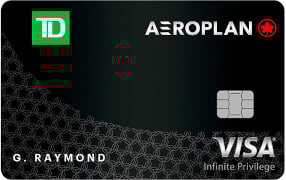
Annual fee: $139
1.5 Aeroplan points per $1 on gas, groceries and purchases
1.5 Aeroplan points per $1 on purchases made directly through Air Canada (including vacation packages)
1 point per $1 on all other purchases
Welcome offer: earn a welcome bonus of 10,000 Aeroplan points when you make your first purchase with your new card; earn 15,000 Aeroplan points when you spend $7,500 within 180 days of account opening. Conditions apply. Account must be approved by September 3, 2024.
Card details
| Interest rates | 20.99% on purchases, 22.99% on cash advances, 22.99% on balance transfers |
| Income required | Personal income of $60,000 or household income of $100,000 |
| Credit score | 660 or higher |
| Anniversary bonus | Earn a one-time anniversary bonus of 15,000 Aeroplan points when you spend $12,000 within 12 months of opening the account. Conditions apply. Account must be approved by September 3, 2024. |
| Point value | Aeroplan points are worth $0.02 on average. |
Pros
- The earn rates are good and you can get the Aeroplan Status Qualifying Miles that help you advance in Aeroplan status on everyday purchases, putting you closer to unique Air Canada benefits, like priority seat selection, free checked bags, airport lounge access and eUpgrades like free Wi-Fi, faster.
- Although Aeroplan is an Air Canada loyalty rewards program, you can redeem points on a dozen Star Alliance partner airlines like United and Lufthansa, giving you more flexibility to redeem your points.
- You’ll earn valuable perks like free first checked bags for up to eight travel companions on North American flights and a $100 Nexus fee rebate every 48 months.
- Get emergency medical travel coverage for longer than with other cards. That’s 21 days, or four days for those 65 and older. It also has a competitive insurance package that includes hotel-motel burglary coverage. Depending on what you prioritize for travel insurance, this card may be the best Aeroplan option for most Canadians.
Cons
- Technically, you can earn more Aeroplan points by using a card like the Amex Cobalt and transferring rewards to Aeroplan at a one-to-one value. However, if you’re looking for simplicity or for the best Aeroplan specific card, this is our top pick.
- Aeroplan offers a tonne of potential value, but as a dynamic program with fluctuating point values, it’s not ideal for cardholders who want a very straightforward rewards structure.
- The annual fee of $139 is higher than some other cards in its category.
For WestJet frequent flyers
At a glance: If your airline of choice is WestJet, this creditncard is worth considering. It not only provides a strong base rate of 1.5% in WestJet reward dollars and a simple redemption process, but it also has some worthy perks like an annual round-trip companion voucher and a free first checked bag for you and up to eight travel companions.
featured
WestJet RBC World Elite Mastercard
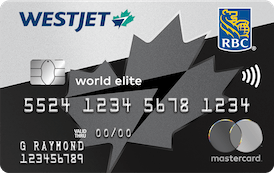
Annual fee: $119
Welcome offer: earn up to $450 in WestJet dollars with the WestJet RBC World Elite Mastercard. Plus, get a Round-Trip Companion Voucher Every Year – for any WestJet destination starting from $119 CAD (plus taxes, fees, charges and other ATC).
Card details
| Interest rates | 20.99% on purchases, 22.99% on cash advances |
| Income required | Personal income of $80,000 or household income of $150,000 |
| Credit score | None specified |
| Point value | 1 WestJet Dollar = $1 CAD when redeemed for eligible flights or vacation packages. |
Best student credit cards
For cash back
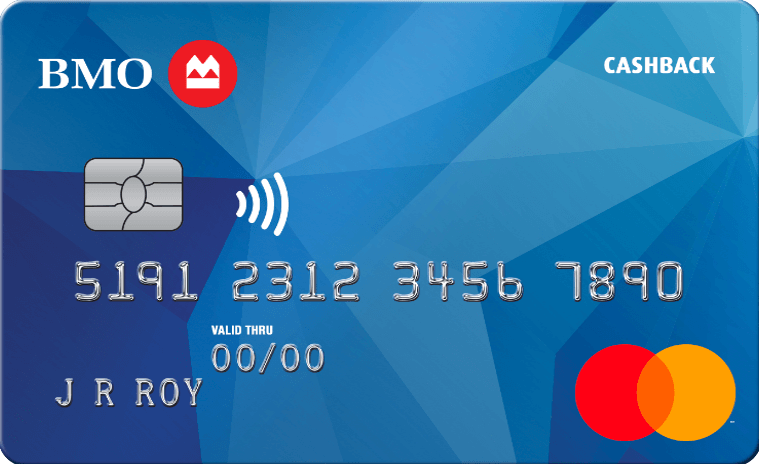
At a glance: This card balances no annual fee with an extraordinary cash back rate of 3% on groceries, giving students the opportunity to get a little money back on their spending. The flexible redemption policy, which lets you redeem when and how you wish, makes this one of the best credit cards for students.
featured
BMO CashBack Mastercard
Annual fee: $0
3% cash back on groceries (on the first $500 per month)
1% on recurring bills
0.5% on everything else
Welcome offer: earn 5% cash back in your first 3 months Conditions apply.
Card details
| Interest rates | 20.99% on purchases, 22.99% on cash advances, 22.99% on balance transfers |
| Income required | None specified |
| Credit score | None specified |
For travel points
At a glance: The CIBC Aeroplan Visa Card for Students bundles the ability to earn Aeroplan rewards with a few travel benefits and student-friendly perks to deliver a competitive package for no annual fee. Your points are valuable with this card, as Aeroplan points are worth double many other reward programs at an average value of $0.02 per point.
featured
CIBC Aeroplan Visa Card for Students

Annual fee: $0
Welcome offer: earn 10,000 Aeroplan points when you make your first purchase ($200 value)
Card details
| Interest rates | 20.99% on purchases and 22.99% on cash advances (21.99% in Quebec) |
| Income required | None specified |
| Credit score | None specified |
| Point value | Aeroplan points are worth $0.02 on average. |
Best credit card for premium perks
At a glance: Before you baulk at the steep $799 annual fee, know that the Platinum Card from American Express offers incredible perks, making that cost worth it. With an annual $200 travel credit, unlimited access to the widest range of airport lounges, premium insurance coverage, hotel upgrades and Platinum Concierge services, it’s a standout even among other top-tier premium cards for frequent travellers.
featured
American Express Platinum
Annual fee: $799
2 points per $1 on dining and food delivery
2 points per $1 on travel, plus 1 additional point on purchases booked through Amex Travel Online
1 point per $1 on everything else
Welcome offer: earn up to 100,000 rewards points ($1,000 value). Conditions apply.
Card details
| Interest rates | N/A (as a charge card, you’re required to pay off your balance in full every month) |
| Income required | None |
| Credit score | 760 or higher |
| Anniversary bonus | $200 annual dining credit to use at a curated list of Canada’s top restaurants. Plus, $200 annual travel credit when booking through American Express Travel Online. |
| Point value | 1 Amex Membership Rewards point = $0.01 when redeemed with the Flexible Points Travel Program, $0.015 on average with the Fixed Points Travel Program, and up to $0.02 with airline points transfers. |
Best hotel credit card
At a glance: This hotel-centric card lets you earn Marriott Bonvoy points on every purchase which you can redeem for service upgrades like free Wi-Fi, experiences like spa treatments and fine dining, as well as hotel stays at more than 30 hotel chains in 130 countries. You can even transfer points to around 40 other airline programs, including Aeroplan, Delta SkyMiles and Virgin Atlantic.
featured
Marriott Bonvoy American Express
Annual fee: $120
Welcome offer: earn 50,000 Marriott Bonvoy points
Card details
| Interest rates | 21.99% on purchases, 21.99% on cash advances |
| Income required | None specified |
| Credit score | 725 or higher |
| Point value | 1 Marriott Bonvoy point = $0.0117 on average when redeemed for eligible flights or hotel stays.. |
Pros
- Marriott Bonvoy points are very flexible so you can access hotel-related upgrades, services, and free nights at hotels including St. Regis, The Ritz-Carlton and Westin. They can also be redeemed for merchandise and experiences, and for travel expenses including car rentals and flights.
- Earn a generous 2 points per dollar base rate and a massive 5 points per dollar spent on all Marriott hotel stays with no annual limit on earnings, which can really add up for frequent travellers. Plus, after you reach $30,000 in total spending on the card during one year, you’ll be upgraded to Marriott Bonvoy Gold Elite status and unlock additional perks.
- Annual perks include one free night’s stay at a Marriott property and 15 Elite Night Credits to help you achieve the next level of status.
- Popular Amex benefits—like Front of the Line and dining, retail and wellness experiences—are included with this card.
Cons
- The ability to transfer points to airline programs is appealing, but at three-to-one for most transfers, the point-to-miles ratio could be stronger.
- Marriott Bonvoy has a dynamic pricing structure which means that you’ll get less value for your points if you book on peak dates or times.
- As an Amex, this card is less widely accepted than Mastercard or Visa.
Best low-interest credit card
At a glance: If you’re looking for a low-interest credit card, you won’t find a more competitive APR than this card’s 10.90%. For those who frequently carry a balance, the Flexi Visa is worth a look. The savings on interest charges with this card could easily outweigh the value of rewards you’d earn with a rewards or cash back credit card if you can’t pay off your balance.
Flexi Visa
Annual fee: $0
Low interest rates: 10.90% on purchases and cash advances
Card details
| Interest rates | 10.90% on purchases and 10.90% on cash advances |
| Income required | Not specified |
| Credit score | Not specified |
Best balance transfer credit card
At a glance: When it comes to making balance transfers, our pick is the MBNA True Line Mastercard, which has a 12.99% interest rate and edges out its nearest competitor, the Scotia Value Visa, because it has no annual fee. That said, this credit card’s 3% balance transfer fee is much larger than the 1% commanded by the Value Visa, so you might want to consider the latter if you’re transferring a major balance.
featured
MBNA True Line Mastercard
Annual fee: $0
Low interest rate: 12.99%
Balance transfer offer: earn a 0% promotional annual interest rate (“AIR”) for 12 months on balance transfers completed within 90 days of account opening, with a 3% transfer fee. This offer is not available for residents of Quebec.
Card details
| Interest rates | 24.99% on cash advances, 17.99% on balance transfers |
| Income required | None specified |
| Credit score | 660 or higher |
Best secured credit card
At a glance: For those with poor or no credit, a secured credit card makes a lot of sense as it allows you the flexibility of using plastic while building up your credit history. What’s great about this Home Trust card is that you’re given a choice: If you’re willing to pay a modest annual fee of $59, you’ll save on interest with a 14.90% purchase APR. Or, if you prefer no fee, you’ll be charged a higher interest rate of 19.99%. We like that this card gives you the option to choose what works best for you.
featured
Home Trust Secured Visa
Annual fee: $0
Earn rate: No rewards (designed for people looking to rebuild credit)
Welcome offer: None
Card details
| Interest rates | 19.99% on purchases and 19.99% on cash advances |
| Income required | None specified |
| Credit score | 300 or higher |
Best store credit card
At a glance: With partner stores across the grocery, pharmacy, clothing and gas sectors, including the entire line-up of Loblaws stores, the PC Optimum program is undoubtedly one of the strongest programs out there for Canadians, and the PC World Elite Mastercard offers the highest value of any store credit card. If you want to redeem points to save on your weekly grocery bill or gas, this card might be for you.
PC Financial World Elite

Annual fee: $0
45 PC Optimum points per $1 at Shoppers Drug Mart
30 points per $1 at Loblaw banner grocery stores
10 points per $1 on everything else
Welcome offer:
Card details
| Interest rates | 21.99% on purchases, 22.97% on cash advances (21.97% for residents of Quebec), 22.97% on balance transfers |
| Income required | Personal income of $80,000 or household income of $150,000 |
| Credit score | 560 or higher |
| Point value | 10 PC points = $0.01 at Loblaws grocery network and Shoppers Drug Mart. |
Pros
- For those who shop at affiliated stores, the potential earnings are fantastic. For example, you’ll get 45 points per dollar at Shoppers Drug Mart which is a 4.5% return. Groceries purchased at Loblaws banner stores like Real Canadian Superstore, Fortinos and No Frills earn 30 points per dollar—that’s 3% back.
- Redemption is simple with 10,000 being valued at $10, and you can cash in your points at checkout to reduce your bill.
Cons
- You’ll need to make $80,000 per year (or $150,000 for the household) to qualify.
- In addition to the income requirement, you have to spend $15,000 annually to maintain your eligibility for the card. Should you fail to do so, you’ll be downgraded to PC’s lower-tier World or entry-level PC Mastercard.
Summary of our top picks
| Best cards by category | Why we love it |
|---|---|
| Best cash back overall SimplyCash Preferred Card from American Express Annual fee: $120 |
4% back on groceries and gas, and 2% back on all other purchases |
| Best no-fee cash back card SimplyCash Card from American Express Annual fee: $0 |
At least 1.25% back on all purchases, with no annual fee |
| Best overall travel rewards credit card American Express Cobalt Annual fee: $156 |
Some of the highest earn rates in Canada (with up to 5x the points on dining and groceries), combined with a flexible points, equals your best return on spending |
| Best airline travel credit card (Air Canada) TD Aeroplan Visa Infinite Card Annual fee: $139 |
High earn rates on gas, groceries and Air Canada purchases, easy redemptions and a $100 Nexus fee rebate every 2 years |
| Best airline travel credit card (WestJet) WestJet RBC World Elite Mastercard Annual fee: $119 |
1.5% earn rate paired with an annual round-trip companion voucher on WestJet |
| Best cash back credit card for students BMO CashBack Mastercard for students Annual fee: $0 |
3% back on groceries and the ability to redeem rewards at any time |
| Best travel credit card for students CIBC Aeroplan Visa Card for Students Annual fee: $0 |
Good return on spending, plus a few travel benefits and student-friendly perks |
| Best credit card for premium perks American Express The Platinum Card Annual fee: $799 |
$400 in travel and restaurant credits, unlimited airport lounge access, hotel upgrades and more |
| Best hotel credit card Marriott Bonvoy American Express Annual fee: $120 |
Redemptions for free stays at over 30 hotel brands (from Marriott to Ritz-Carlton), plus point transfers to partner airline programs |
| Best low-interest credit card Flexi Visa Annual fee: $0 |
10.90% purchase interest rate |
| Best balance transfer credit card MBNA True Line Mastercard Annual fee: $0 |
earn a 0% promotional annual interest rate (“AIR”) for 12 months on balance transfers completed within 90 days of account opening, with a 3% transfer fee. |
| Best secured credit card Home Trust Secured Visa (low-rate option) Annual fee: $0 |
Guaranteed approval regardless of credit score, with the option to pay no annual fee or receive a low APR (annual percentage rate) of 14.90% if you opt to pay an annual fee |
| Best store credit card PC Financial World Elite Mastercard Annual fee: $0 |
Highest rate of return on spending at one of the largest retail networks in the country |
Our selection process
Many websites that compare financial products let computer systems make their credit card recommendations. Using formulas and a list of data points, they crunch the numbers and spit out an “impartial” or “unbiased” list of cards. The problem is credit card recommendations aren’t an exact science—they’re subjective by nature. Do five free airport lounge visits per year trump no foreign transaction fees on international purchases? Answer: Depends who you ask.
Instead of relying on algorithms, MoneySense editors consider and debate how Canadians actually use credit cards. Our editors apply their credit card expertise, extensive research in the fine print (we’ll even phone up the banks!) and knowledge of Canadians’ financial goals to come up with selection criteria that best reflect the category and type of card. Our recommendations are subjective—and yes, open to debate—but they are always made with you in mind.
First off, any credit card issued in Canada has the potential to be featured as one of our picks—not just affiliate partners like some other sites. In most cases, there are only a handful of strong cards in any given category that are worthy of a close point-by-point comparison.
Once we have our shortlist of cards, we dig into the fine print to see how they stack up on the criteria that matter most for the category—it could be the rate of return on your spending (for travel cards), the interest rates offered (for balance transfer and low-interest cards), or the eligibility criteria (for student cards). Oftentimes, it’s a combination of a few factors.
This focus helps us find the products that are mostly likely to help you achieve your goals. In the end, additional features and benefits are often better treated as an added bonus—not the main reason to get a card, but nice to have anyway.
What to do if your credit card application is declined
You may have difficulty getting a new credit card for a variety of reasons, from not meeting the card’s income requirements to not having a high enough credit score. If your application is denied, Doris Asiedu, a certified credit counsellor with Credit Canada, recommends you take these four steps.
How credit cards work
When you use a credit card, you’re taking out a short-term loan with a balance that comes due every month. As you pay down your balance, the credit available to you the following month starts to go back up to the maximum credit limit on your card. There are many ways you can use a credit card. For example, many cards can be used for purchases, for balance transfers and/or cash advances. As useful as they are, it’s important to understand how to use credit cards responsibly to avoid falling into financial trouble.
How to calculate credit card interest
Credit card interest is expressed as an annual percentage rate, or APR. It is a fee charged for borrowing money from the credit card issuer. If you’ve paid your credit card balance in full by the end of the billing cycle, you won’t be charged any interest. But if you carry a credit card balance, interest charges begin to accumulate, and you’ll continue to pay interest until you pay your balance back in full.
Though APRs are expressed in annual terms, credit card interest is calculated daily and charged monthly. (The APR represents the total cost of borrowing money for a year.) You can figure out your daily interest rate by dividing your APR by 365 (or 366 during a leap year). For a credit card with a 19.99% APR, your daily rate is 0.0548%.
This means a $1,000 balance will incur $0.54 in interest charges in a single day. And the interest compounds daily, which means that the next day, assuming you don’t make any additional purchases, you’d be charged interest on a total of $1,000.54, and so on. Finally, at the end of the billing cycle, you’re charged interest based on the average daily balance during each one of the days in the billing cycle. So, to determine the amount of interest owed:
- Calculate your daily interest rate by dividing the APR by 365.
- Find your average daily balance by adding up the balances for each day of the billing cycle and dividing it by the number of days in your statement period.
- Multiply your average daily balance by the daily interest rate, and multiply this total by the number of days in the statement period.
That’s why it’s best to pay down your debt as quickly as possible. If you don’t pay off your balance in full by the date noted on your statement, you’ll owe interest, starting on the day that you made your purchase.
Federally regulated financial institutions (think major banks) are required to offer an interest-free grace period of at least 21 days, which begins on the last day of your billing period. Some issuers offer up to 30 days. (Note: This rule doesn’t apply to cash advances or balance transfers.)
What are the advantages of using a credit card?
One of the major benefits of a credit card is convenience. You can simply pay for your purchase knowing you will be billed for the outstanding balance the following month—no need to carry cash in your wallet, plus you can shop online.
Other benefits include the ability to accrue rewards and points—such as cash back or travel points—based on a percentage of your purchases each month; depending on the card you choose, it starts at 1% and goes up to 4%. You can then redeem those points for gift cards, travel or other items offered through the credit card company’s online rewards catalogue.
Credit cards can also help you build credit. Always paying on time will help you achieve a high credit score (650 plus), allowing you to borrow for a mortgage or a car loan in the future at a reasonable interest rate from a financial institution.
Types of credit cards
When it comes to rewards credit cards, the name says it all. These are cards that give you something back when you spend with them, whether it’s points or cash. The more you spend, the more rewards you get. For those who pay off their balance in full every month, these cards can really add value. There are four main types of rewards cards:
Cash back credit cards
Cash back cards offer a rebate credited to your balance, usually calculated as a percentage of the dollar value of your purchases. Most of these cards have accelerated earn rates in certain categories (groceries and gas, for example), and they all have a minimum base rate for spending outside those categories. Your cash back rewards can help you save on anything you can buy with your card. See our picks for the best cash back cards in Canada.
Travel credit cards
These cards offer points or miles to be redeemed towards travel-related purchases such as flights, hotels, cruises and vacation packages. Rewards might not be as straightforward as cash back, but travel points cards can help you save big on upcoming trips, with many offering perks including sign-up bonuses, comprehensive travel insurance and airport lounge access. See our picks for the best travel credit cards in Canada.
Store credit cards
These credit cards gift you with points for everyday purchases that can be redeemed for discounts off items from your favourite retailer. The idea is to reward brand loyalty with valuable benefits. The PC Financial Mastercard and the Canadian Tire Mastercard credit cards are great examples. See our picks for the best store credit cards in Canada.
Hotel credit cards
Similar to travel cards, hotel credit cards reward consumers with points redeemable for hotel stays and perks. These cards are often linked or co-branded with a specific hotel brand or loyalty program, like Marriott Bonvoy or Best Western Rewards.
Picking the best card: What else to consider
Once you’ve selected the category of card that you want, consider the earn rate, additional benefits and type of points earned with each card. If you happen to spend a lot on gas and groceries, look for a card with a high earn rate for those categories. The annual fee should also be considered. There’s a wide selection of no-fee credit cards in Canada. Although no one likes to pay an annual fee simply to use their card, annual-fee cards typically offer more in perks and value back—meaning you can still easily come out on top financially.
Common credit card protections
When comparing credit cards in Canada, it’s important to consider the protections that come with your chosen card. Here are some of the most common ones:
- Purchase protection: Many credit cards provide purchase protection to cover eligible purchases against loss, damage or theft for a specified period after the purchase is made. The coverage amount and duration can vary among credit cards, so it’s important to review the terms and conditions of your specific credit card.
- Zero liability: In Canada, most credit cards offer zero liability protection, meaning you won’t be held responsible for unauthorized charges made on your credit card account. Nevertheless, it’s extremely important to report any suspicious transactions or unauthorized activity to your card issuer.
- Extended warranty: Some credit cards offer extended warranty protection, which extends the manufacturer’s warranty on eligible purchases for an additional period. This can provide added peace of mind, particularly for higher-value purchases.
- Travel insurance: Certain credit cards may include travel insurance benefits such as trip cancellation/interruption insurance, emergency medical coverage, baggage loss/delay insurance, and rental car insurance. The specific coverage and conditions vary, so review the details of your credit card’s travel insurance policy.
- Fraud protection: Credit card issuers typically have robust fraud protection measures in place. If your credit card is lost or stolen, you can report it to your card issuer immediately, and they will usually deactivate the card to prevent unauthorized use.
Frequently asked questions
Your decision for which credit card is best for you and your family will come down to whether a cash back or travel rewards credit card best suits your needs and spending habits. Travel rewards can be lucrative, but what you earn from a cash back card can be spent on anything—or saved.
When considering a cash back card, take stock of your spending habits and pick the card that will earn you the most rewards. For example, if you spend a lot on gas, then pick a card that earns you more cash back at gas stations. High earn rates are great, but keep in mind that many of the top cards have a high income requirement.
Also note that some cash back credit cards will only give you what you’ve earned after you reach a minimum amount or once per calendar year. Find out how you’ll get paid, and make sure you’re okay with it before you apply. If you’re considering a card with an annual fee, make sure the cash back you earn is worth more than the fee. If it’s not, stick to a no-fee card.
What does the * mean?
Affiliate (monetized) links can sometimes result in a payment to MoneySense (owned by Ratehub Inc.), which helps our website stay free to our users. If a link has an asterisk (*) or is labelled as “Featured,” it is an affiliate link. If a link is labelled as “Sponsored,” it is a paid placement, which may or may not have an affiliate link. Our editorial content will never be influenced by these links. We are committed to looking at all available products in the market. Where a product ranks in our article, and whether or not it’s included in the first place, is never driven by compensation. For more details, read our
MoneySense Monetization policy.